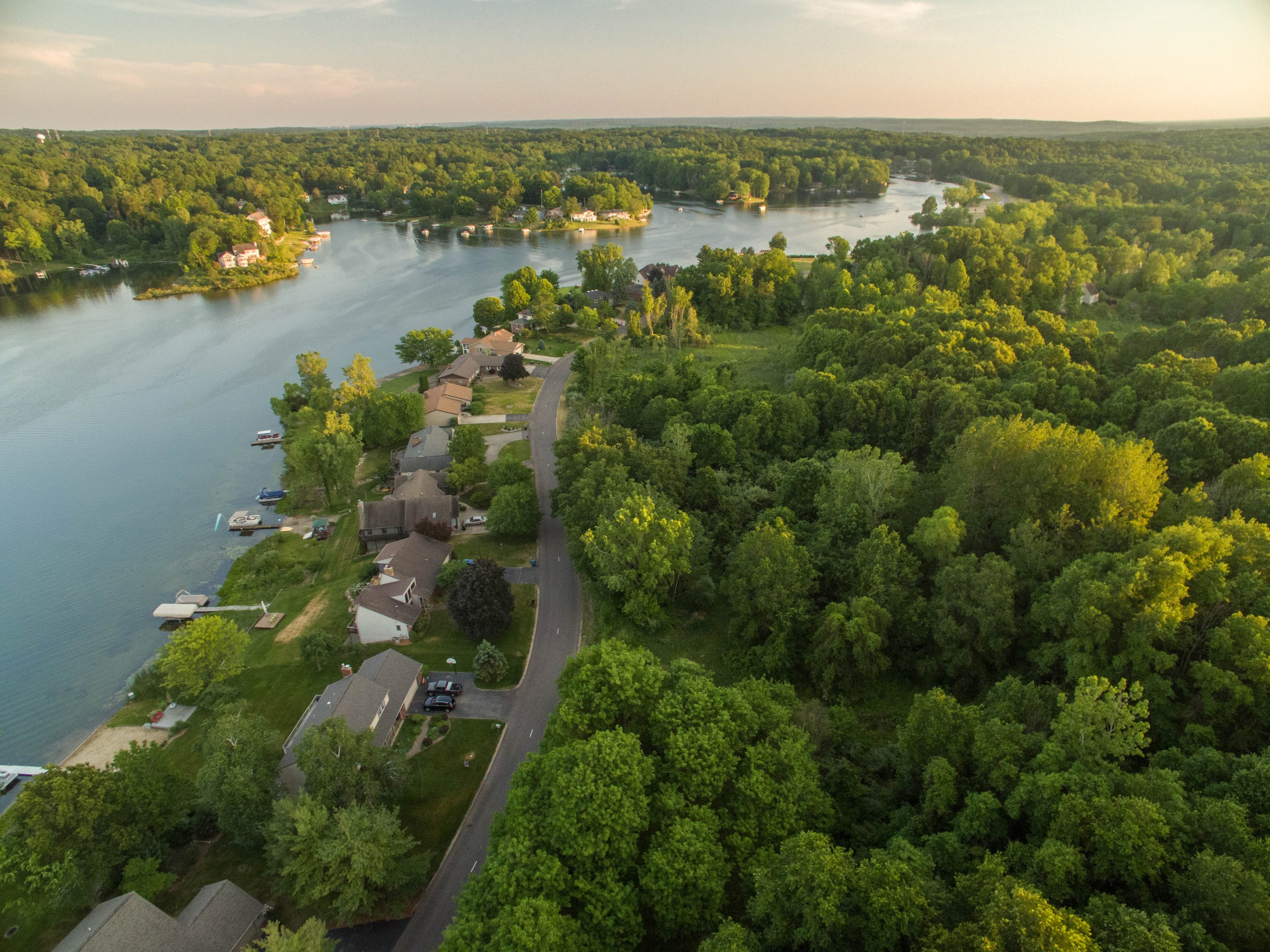
If you are buying a home on a lake around here, there is a good chance it is on a private well and a septic system. And there is a reasonable chance the home started life as a seasonal cottage and got winterized somewhere along the way.
That combination is where the expensive surprises live. Of everything on this list, septic is the one I would never let a buyer skip.
Michigan has no statewide septic code
This is unusual and worth knowing: Michigan is the only state in the country without a statewide sanitary code governing onsite wastewater systems. Regulation happens at the local health department level, which means the rules — and whether anyone inspects at sale — depend on which county you are standing in.
For Southwest Michigan that means:
- Allegan County — Allegan County Health Department
- Barry County — Barry-Eaton District Health Department
- Kalamazoo County — Kalamazoo County Health & Community Services
- Calhoun County — Calhoun County Public Health Department
- Van Buren and Cass counties — Van Buren/Cass District Health Department
- St. Joseph County — Branch-Hillsdale-St. Joseph Community Health Agency
Some jurisdictions in Michigan operate time-of-sale or time-of-transfer programs requiring an evaluation before a home changes hands; others do not. These programs have changed over the years, so do not assume based on what was true at a sale a few years back. Call the health department for the county the home is in and ask what applies today.
Why lake lots are the hard case
A septic system needs separation — from the water table, from surface water, from the well. On a lake lot you are frequently working with all of the following at once:
- A small lot, platted long before anyone thought about setbacks
- A high water table, because you are next to a lake
- Sandy soil in some spots and heavy clay in others
- A well and a drainfield that both have to fit, at a distance from each other
That is why an older lake cottage can have a system that would not be permittable today. It may work fine. But if it fails, the question is not "what does a new septic cost" — it is whether a conforming system can be sited on that lot at all, and what the health department would require. On a tight lot, the answer can involve an engineered or alternative system at a materially different cost.
The seasonal-to-year-round problem
A system sized for a family using a cottage eight weekends a summer is not sized for four people living there in January. Plenty of lake homes have been converted — insulation, a furnace, a bigger kitchen, a second bath — without the septic ever being revisited.
If the home has been added onto or converted, ask specifically whether the system was upgraded at the same time, and whether a permit was pulled. The health department will have the permit record. A finished basement bathroom that never appeared on a septic permit is a flag worth chasing.
What to actually do
- Order a full septic evaluation, with the tank pumped and opened and the drainfield assessed. A visual "looks fine" is not an evaluation. Pay for the real one.
- Pull the permit record from the county health department: when the system was installed, its size, and what it was approved for.
- Test the well for bacteria and nitrates at minimum. Ask the health department what else is worth testing locally — some areas have known arsenic in the groundwater, and that is a local-knowledge question.
- Find out where both are, physically. Buyers who do not know where the drainfield is park on it.
- Ask about the well's age, depth, and casing. A shallow well near a lake is a different proposition than a deep drilled one.
One more reason to care
Failing septics around a lake are a water-quality problem for everyone on that lake, which is why so many lake associations push for inspection programs. If you end up owning on the water, you have a stake in that beyond your own system.
If you want the sales record for a specific lake while you are weighing a home, every lake I track is at jobrienhomes.com/lakes — including the smaller Barry County lakes like Wall Lake, Fair Lake, and Gilkey Lake, where converted cottages are common.
If you want a hand with this
I grew up in Plainwell and I have been on and around these lakes my whole life. If you are looking at a waterfront home and want someone to actually check the septic permit record and the well before you write an offer, call or text me at (269) 247-6868, or send me a note. If you already own on a lake here and just want to know what things are selling for, every lake I track is at jobrienhomes.com/lakes.

Jason O'Brien
Realtor® in Southwest Michigan. 10+ years selling homes, solving problems, and answering the phone.
Free Buyer's Guide
Learn what to look for in Southwest Michigan homes.
I'll respond within 24 hours. No spam, just honest service.