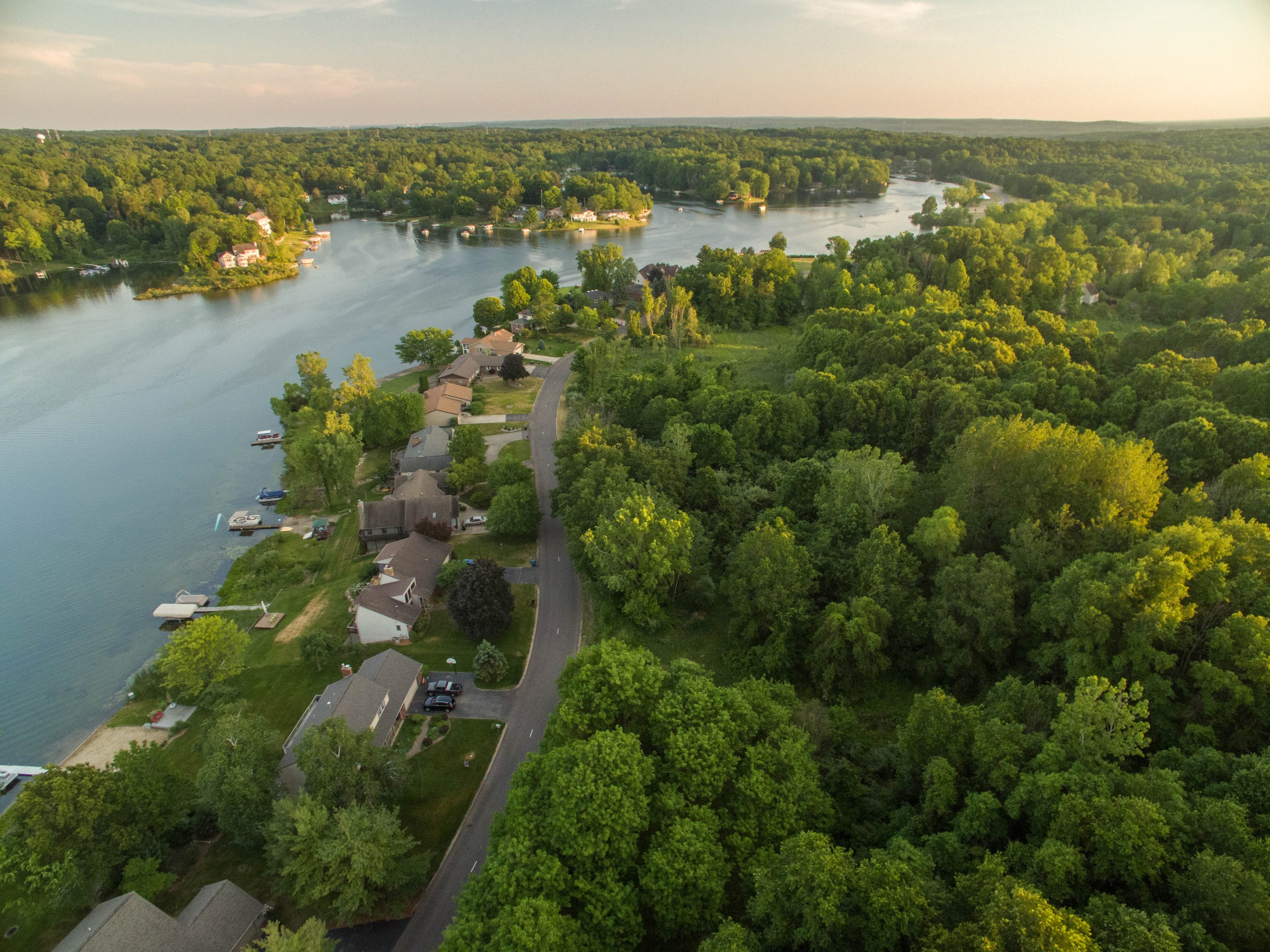
Here is a line item that catches new lake owners off guard: a charge on the winter tax bill, a few hundred dollars, labeled something like "lake level" or the name of the lake followed by "SAD."
It is not a mistake, and it is not an HOA fee. It is a special assessment, and understanding it tells you a lot about how your lake actually works.
Lakes do not hold their level by themselves
A natural lake rises and falls with rainfall, groundwater, and evaporation. Many Michigan lakes — including a good number around here — are held at a more stable level by a dam, a weir, or a control structure on the outlet.
That structure exists because at some point the people around the lake wanted the level to stop moving. Docks, seawalls, boat lifts, lawns, and septic fields all get designed around a water level, and a lake that swings two feet is hard to live on.
The legal level is set by a court
Michigan handles this under Part 307, Inland Lake Levels, of the Natural Resources and Environmental Protection Act (1994 PA 451).
The process runs roughly like this. The county board or a petition of local owners asks the circuit court to establish a legal level for the lake. The court holds proceedings, takes evidence, and enters an order fixing the normal level — often with separate summer and winter levels. A delegated authority is named to maintain it, which in most counties is the drain commissioner or water resources commissioner.
Once that order exists, the level is not a matter of local opinion. It is a court-ordered elevation, and the delegated authority has a legal duty to maintain it.
Someone has to pay for the structure
Dams need inspection, repair, and eventually replacement. Outlets need clearing. Engineering studies get commissioned. None of it is free, and it is not paid out of general county funds.
Instead a special assessment district is established covering the lands that benefit — typically the homes around the lake, sometimes with different tiers for waterfront versus back lot. The cost is apportioned across those parcels and collected on the tax bill.
What a waterfront buyer should understand:
- It runs with the land. You inherit it at closing. It is not optional and it does not transfer away.
- It is not fixed. A routine year is modest. A year the dam needs major work is not, and a large repair can be spread over several years as a much bigger assessment.
- It is separate from any lake association dues. A lake can have both. They are different mechanisms with different legal force — see the post on associations.
The question worth asking before you buy
Not "what is the assessment" — that is on the tax record and your agent can pull it. The better question is what condition is the structure in, and when was it last evaluated?
A dam approaching the end of its service life is a known, scheduled, shared expense heading toward every home on that lake. That is not a reason to avoid the lake. It is a reason to know the number before you commit, the same way you would want to know a roof was fifteen years old.
Where to ask:
- The county drain commissioner or water resources commissioner for the county the lake sits in. They administer the level and the district, and this is public information.
- The township assessor for the current assessment on a specific parcel and its history.
- EGLE's dam safety program for the regulatory status of a dam, at michigan.gov/egle.
While you are checking public records
If a lake is fed by or impounded from a river, it is worth spending ten minutes on its environmental record too. That is not a comment about any particular lake — it is a research step, and the databases are free and public:
- EPA cleanup site search
- EGLE's environmental mapper, at michigan.gov/egle
- Michigan's Eat Safe Fish guide, which is organized by water body
Look up any lake you are serious about. Look up the one you already live on too.
If you want a hand with this
I grew up in Plainwell and I have been on and around these lakes my whole life. If you are looking at a waterfront home and want someone to actually check the assessment history and the condition of the control structure before you write an offer, call or text me at (269) 247-6868, or send me a note. If you already own on a lake here and just want to know what things are selling for, every lake I track is at jobrienhomes.com/lakes.

Jason O'Brien
Realtor® in Southwest Michigan. 10+ years selling homes, solving problems, and answering the phone.
Free Buyer's Guide
Learn what to look for in Southwest Michigan homes.
I'll respond within 24 hours. No spam, just honest service.